Model CN-05 — Six Acetates Handmade in Bavaria / Est. 1974

One frame.
Cut from a block, not a mould.
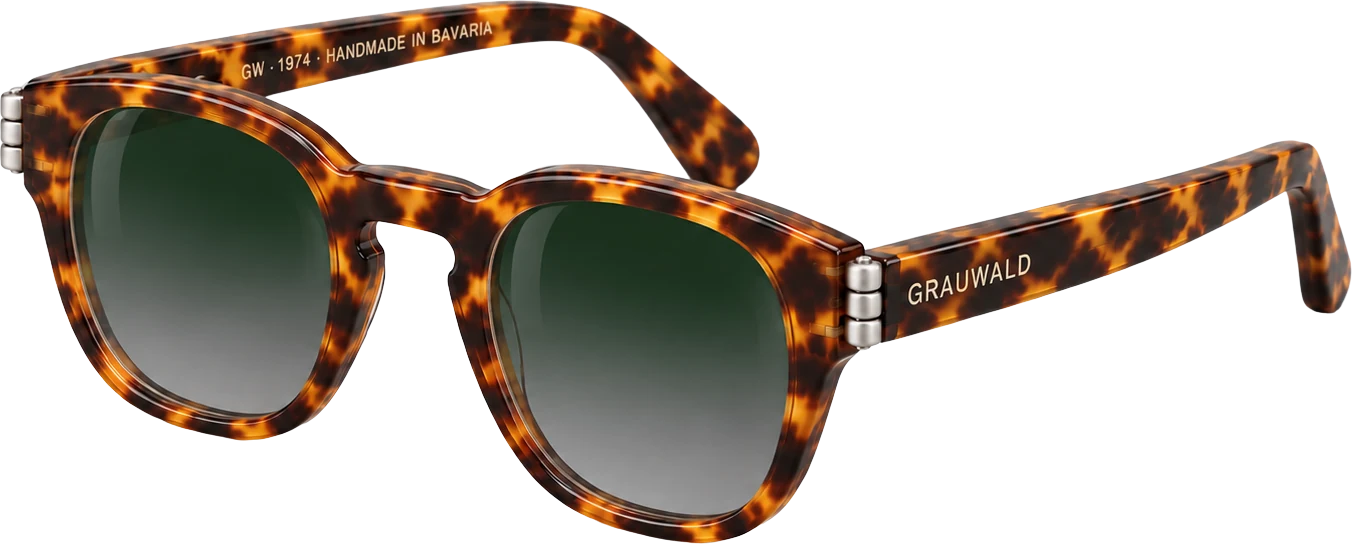
GRAUWALD CN-05 in Schildpatt Amber, three-quarter view CN-05/04 · Schildpatt Amber
MAZZUCCHELLI ACETATE  ✦  CUT FROM A BLOCK  ✦  HAND-POLISHED 72 HOURS  ✦  GERMAN SILVER CORE WIRE  ✦  HANDMADE IN BAVARIA  ✦   MAZZUCCHELLI ACETATE  ✦  CUT FROM A BLOCK  ✦  HAND-POLISHED 72 HOURS  ✦  GERMAN SILVER CORE WIRE  ✦  HANDMADE IN BAVARIA  ✦  

Six Acetates

Select a colourway

Worn

Campaign 001 · Six acetates

Campaign 001 is performed by Miranda Calder, Livia Serrano, Aiko Velora, Milena Lindqvist, Elias Nygaard and Amara Okoye — certified synthetic talent by OMNI Labs. AI-generated models, not photographs of real people.

The position

A frame should
outlive the face
that chose it.

We make one shape. We have made it since 1974, and we have changed it four times — each time because a hinge failed or a temple sat wrong, never because a season asked us to.

The CN-05 is milled from a solid block of Mazzucchelli acetate, dried for eight weeks, and tumbled in beechwood chips until the surface comes up without a single pass of lacquer. What you see is the material, not a coating over it.

The film

Some things
are still made
by hand.

Forty-three seconds in the block room, the pantograph and the polishing drum. No narration — just the sound of the bench.

Honey tortoise acetate · CN-05/03
1974
Year the house opened
72h
In the polishing drum
01
Shape in the catalogue
06
Acetates in the block room
{{ mainAlt }}
Model CN-05 · {{ specimenId }}

CN-05
/ {{ colorwayLabel }}

€380 Made to order · 4 weeks
Acetate
Size {{ sizeFit }} · {{ sizeSpec }}

One shape, cut at three widths from the same block. The bridge and the profile are unchanged — only the front and the temples move.

Material
{{ materialLabel }}
Lens
{{ lensLabel }}
Eye / Bridge / Temple · {{ sizeLabel }}
{{ sizeSpec }}
Hinge
Riveted 3-barrel, german silver
Origin
Handmade in Bavaria

Each frame is cut to order. Because the acetate is a natural block, the pattern falls differently on every pair — the one you receive will not match this photograph exactly.

Worn / {{ colorwayLabel }}

Campaign 001
{{ cast0Alt }}
{{ cast0Name }}
{{ cast1Alt }}
{{ cast1Name }}
{{ cast2Alt }}
{{ cast2Name }}

Campaign 001 is performed by certified synthetic talent from OMNI Labs — AI-generated models, not photographs of real people.

{{ oMainAlt }}
Model CN-05 Optical · CN-05-O/04

CN-05 Optical
/ Schildpatt Amber

€340 Frame only · lenses at your optician

The same front, the same riveted hinge, the same block. Only the lens changes: a clear demo lens ships in the frame so your optician can edge a prescription straight into it.

Material
Tortoise acetate
Lens
Clear demo, prescription-ready
Eye / Bridge / Temple · {{ sizeLabel }}
{{ sizeSpec }}
Hinge
Riveted 3-barrel, german silver
Origin
Handmade in Bavaria

The optical line runs in one acetate for now. The remaining five blocks are cut to sun lenses only — ask the workshop if you want one of them glazed clear.

The material

Acetate

Cotton, not oil. A plastic that started as a plant.

Cellulose acetate is made from cotton linter — the short fibres left on the seed after ginning. It is pressed into blocks, and the pattern you see is not printed on the surface; it runs the full depth of the material. Cut the block anywhere and the marbling continues.

This is why an injection-moulded frame can imitate the look and never the behaviour. Moulded plastic is uniform, cold, and brittle at the hinge. A cut block warms to the skin, holds an adjustment, and can be re-polished after a decade of wear.

Source
Mazzucchelli, Castiglione Olona
Base
Cotton linter cellulose
Block drying
8 weeks, unforced
Finish
Beechwood tumble, no lacquer
Colourways
Six, cut from six blocks
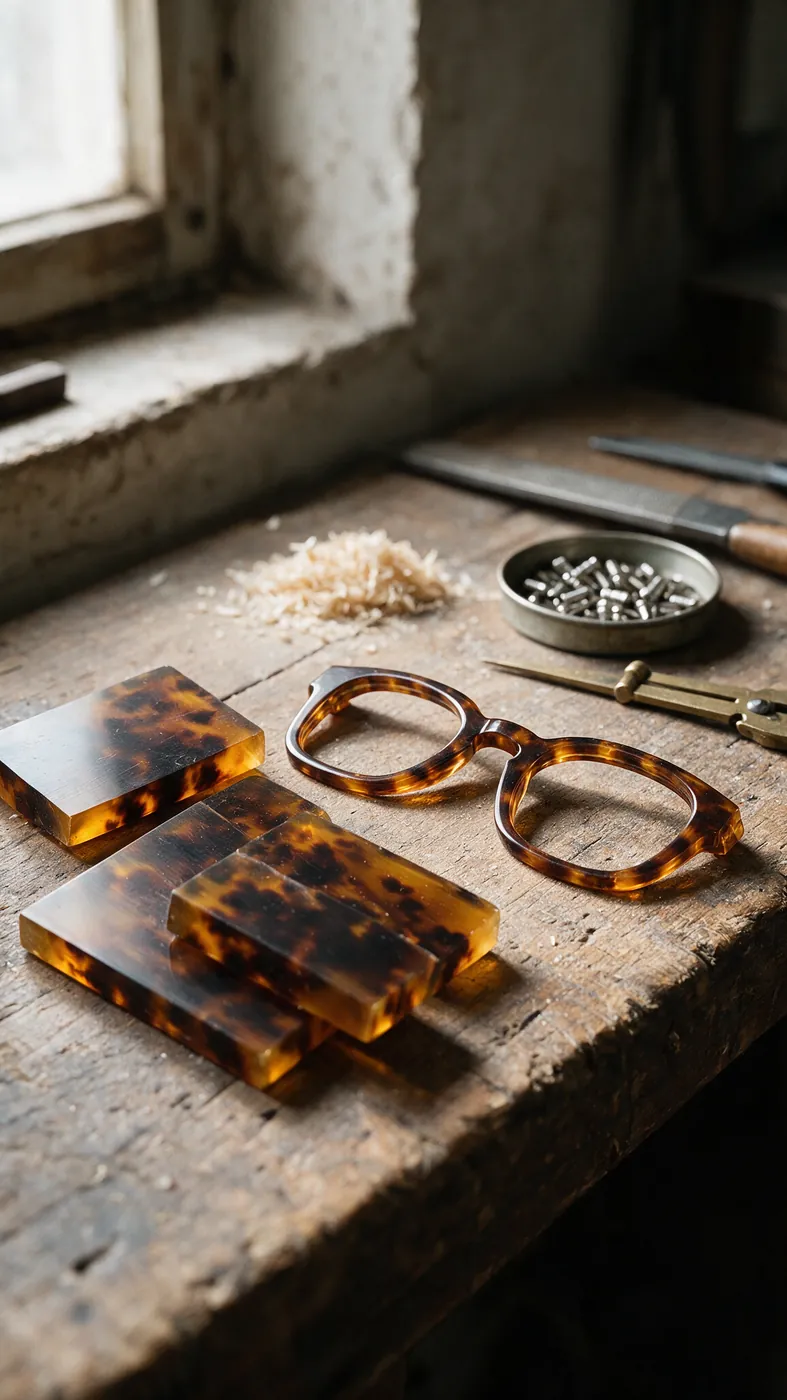
Acetate blocks and a cut CN-05 front on the workshop bench

The Six Blocks

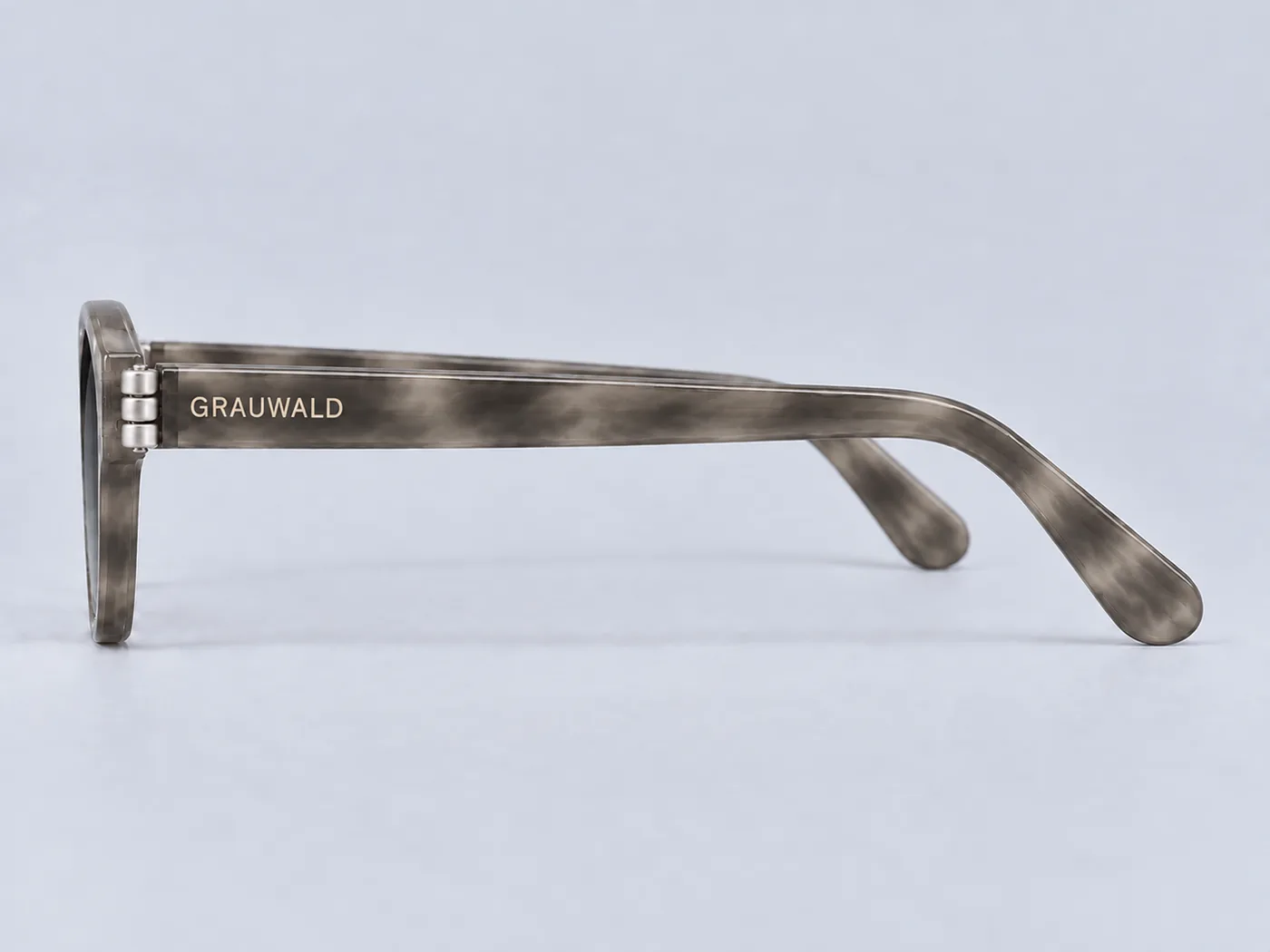
Grauwald Smoke acetate, temple profile
Grauwald Smoke
Block 01
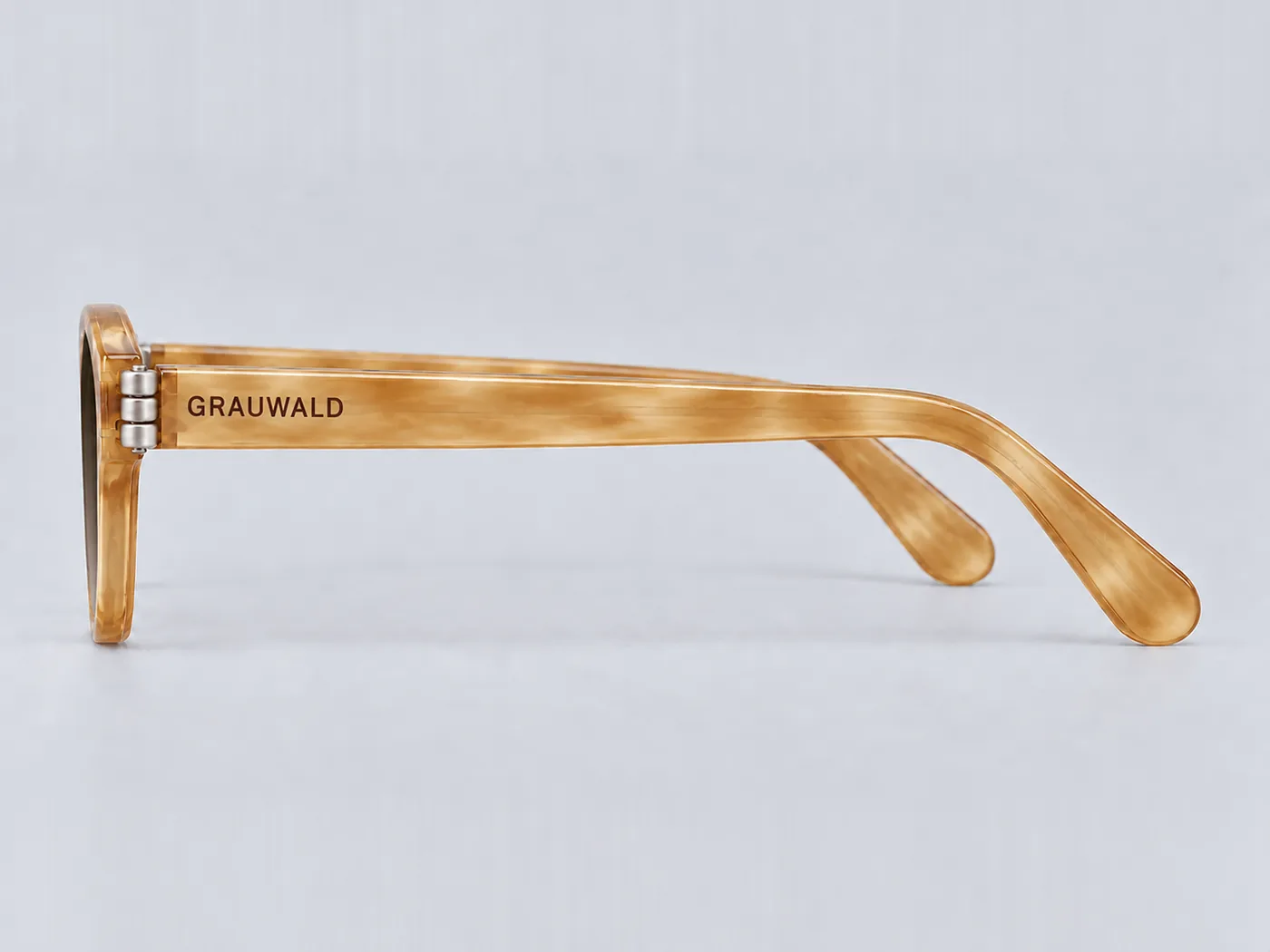
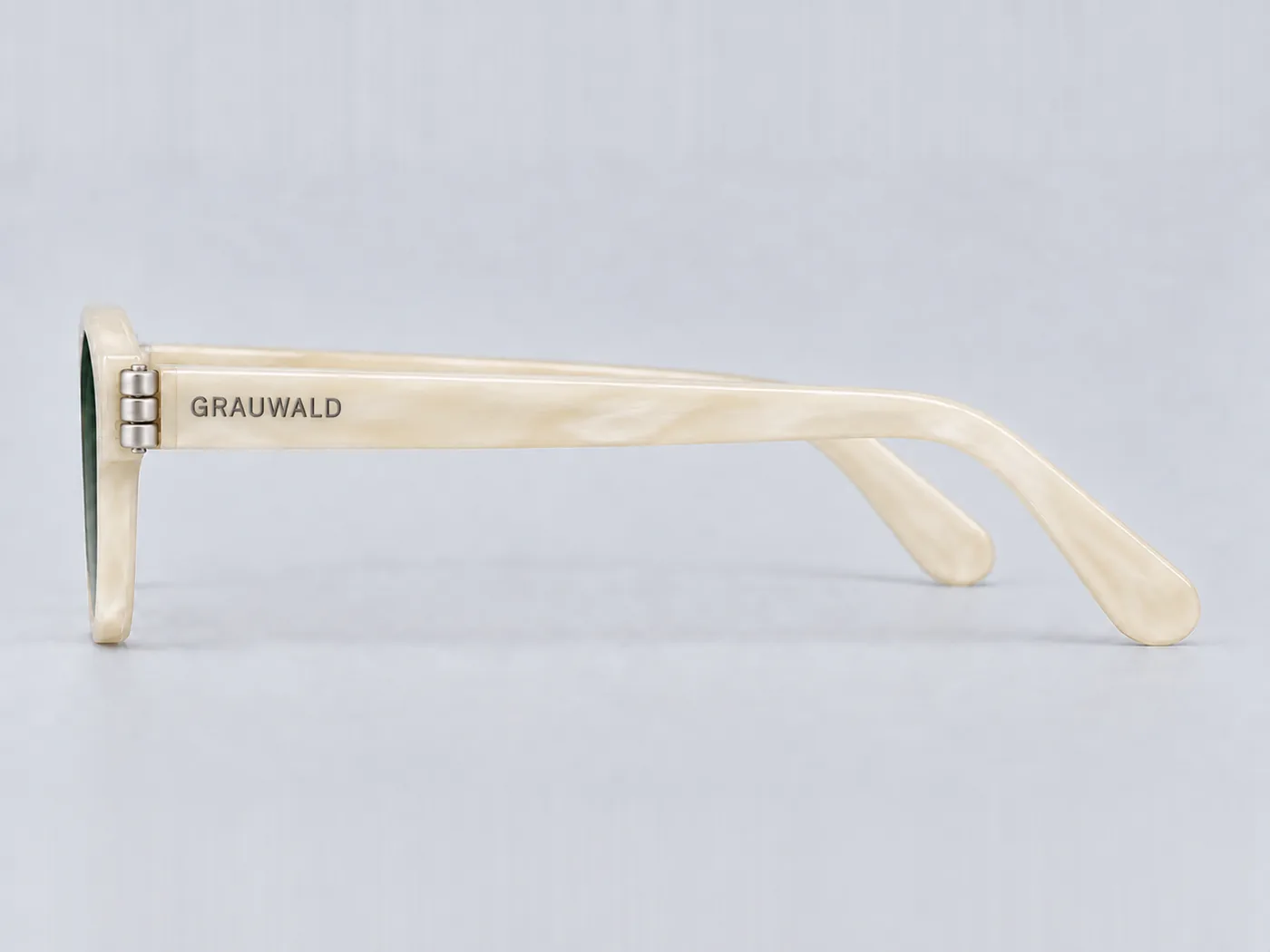
Honig Blonde acetate, temple profile
Honig Blonde
Block 03
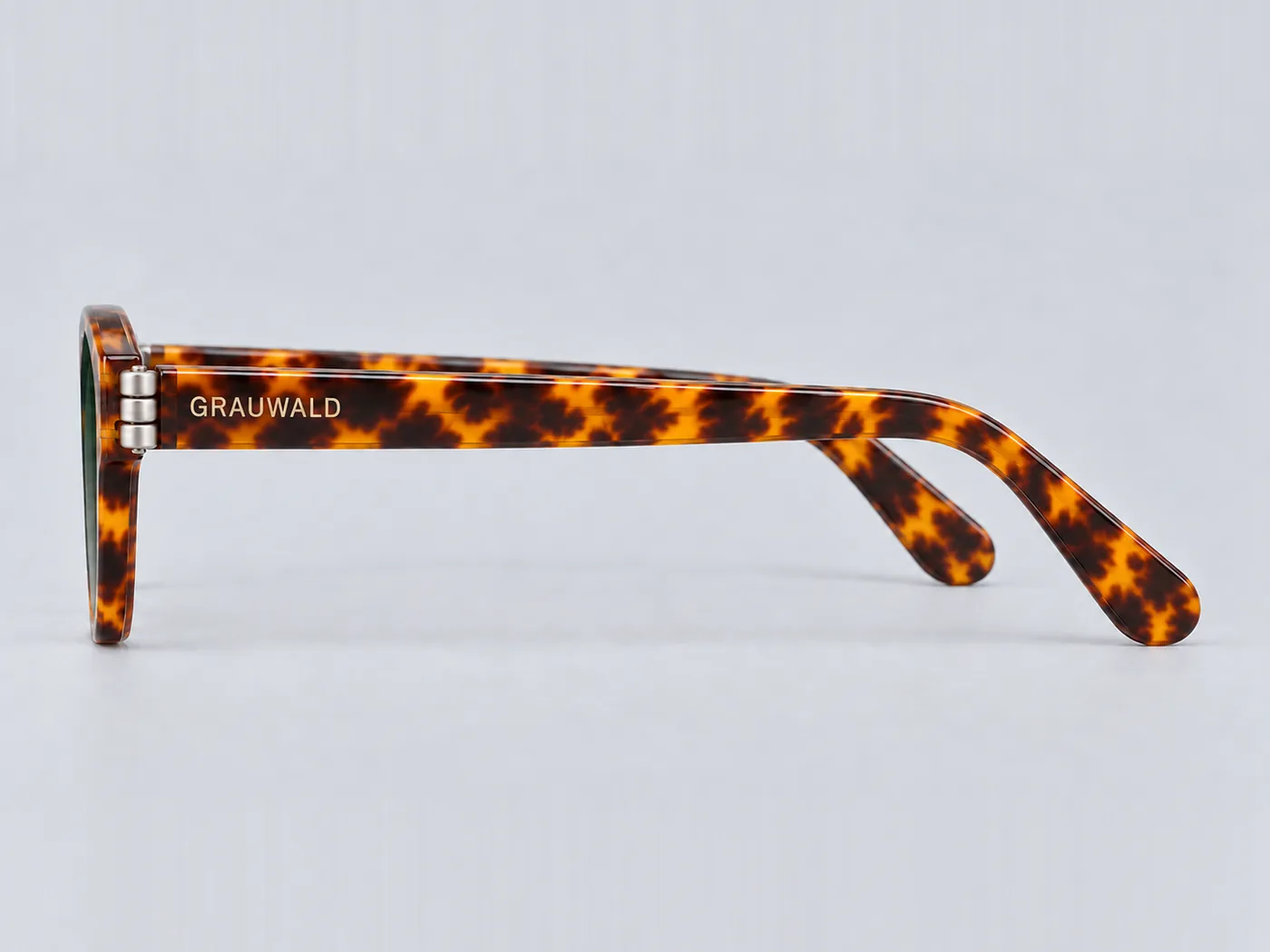
Schildpatt Amber acetate, temple profile
Schildpatt Amber
Block 04
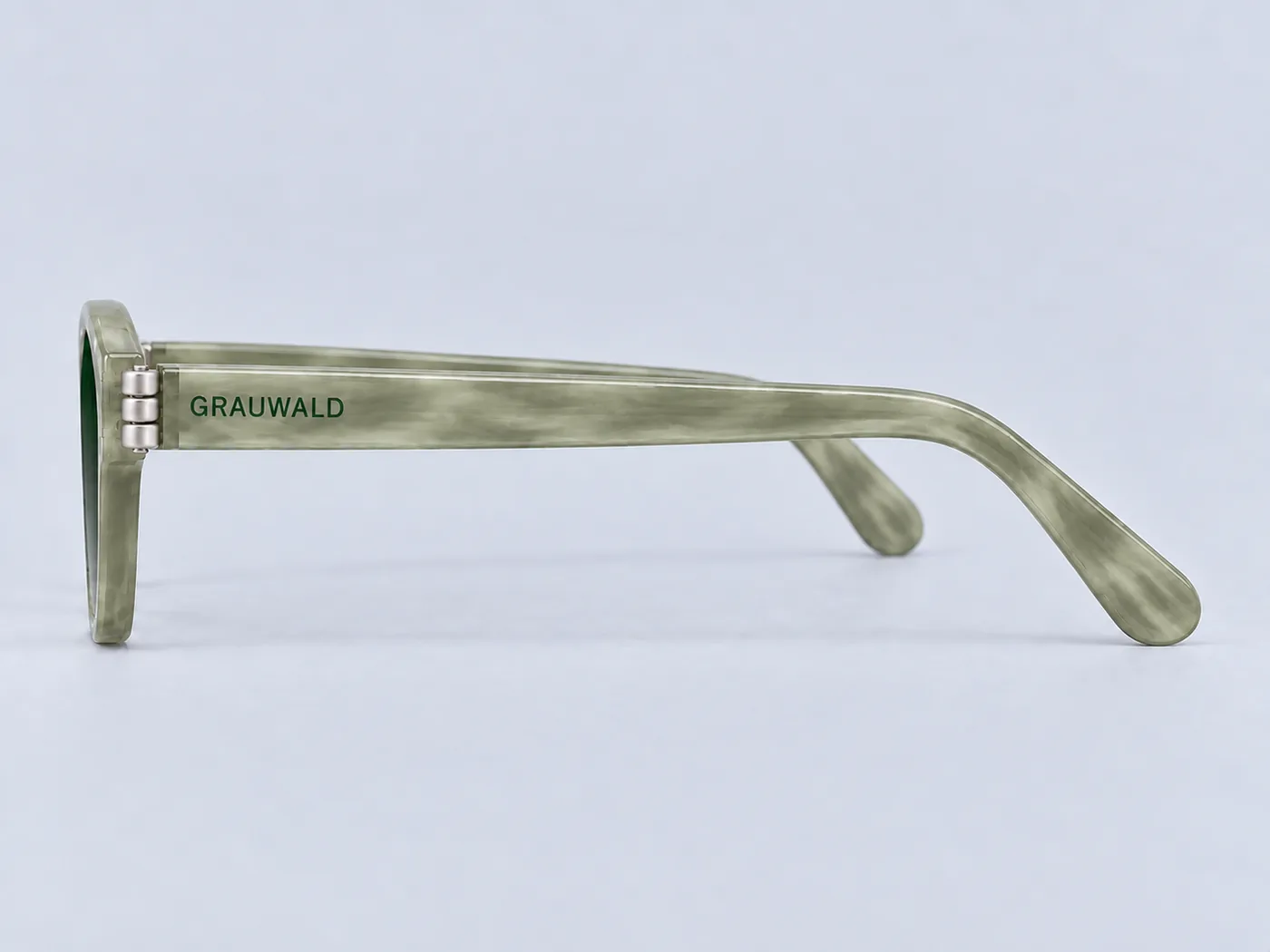
Moos Sage acetate, temple profile
Moos Sage
Block 05
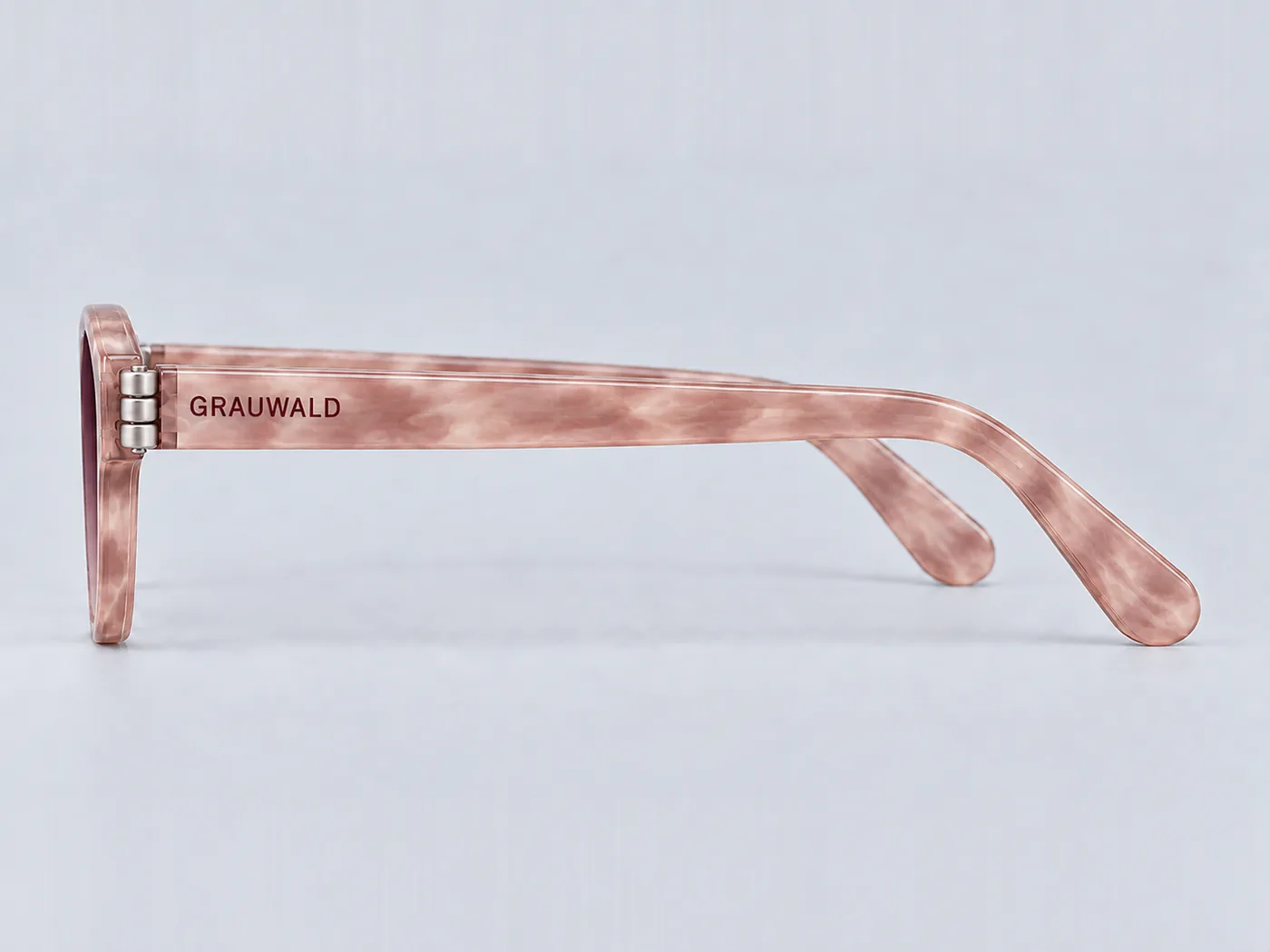
Heide Rose acetate, temple profile
Heide Rose
Block 06
Bein Ivory acetate, temple profile
Bein Ivory
Block 02
Eleven stages · Sixty-one days

Workshop

01

The block arrives

A sheet of Mazzucchelli acetate, 6mm, still faintly smelling of camphor. It rests in the block room for eight weeks. Cut it early and the frame will move on the wearer’s face a year later.

02

Milling the front

The CN-05 front is cut on a pantograph against a brass master that has not changed since 1991. The rims are left deliberately heavy — the final thickness is decided by hand, not by the machine.

03

Setting the core wire

A german silver wire is heated and sunk the full length of each temple. It is what lets an optician bend the arm to a head and have it stay bent. A temple without a core is a temple that snaps.

04

Riveting the hinge

Three barrels, riveted rather than heat-sunk. It takes four times as long and it is the only reason a forty-year-old GRAUWALD still opens with resistance instead of flopping shut.

05

Seventy-two hours in the drum

Beechwood chips, then pumice, then dry cloth. No lacquer is sprayed at any point. The shine is the acetate itself, brought up by abrasion — which means it can be brought up again in twenty years.

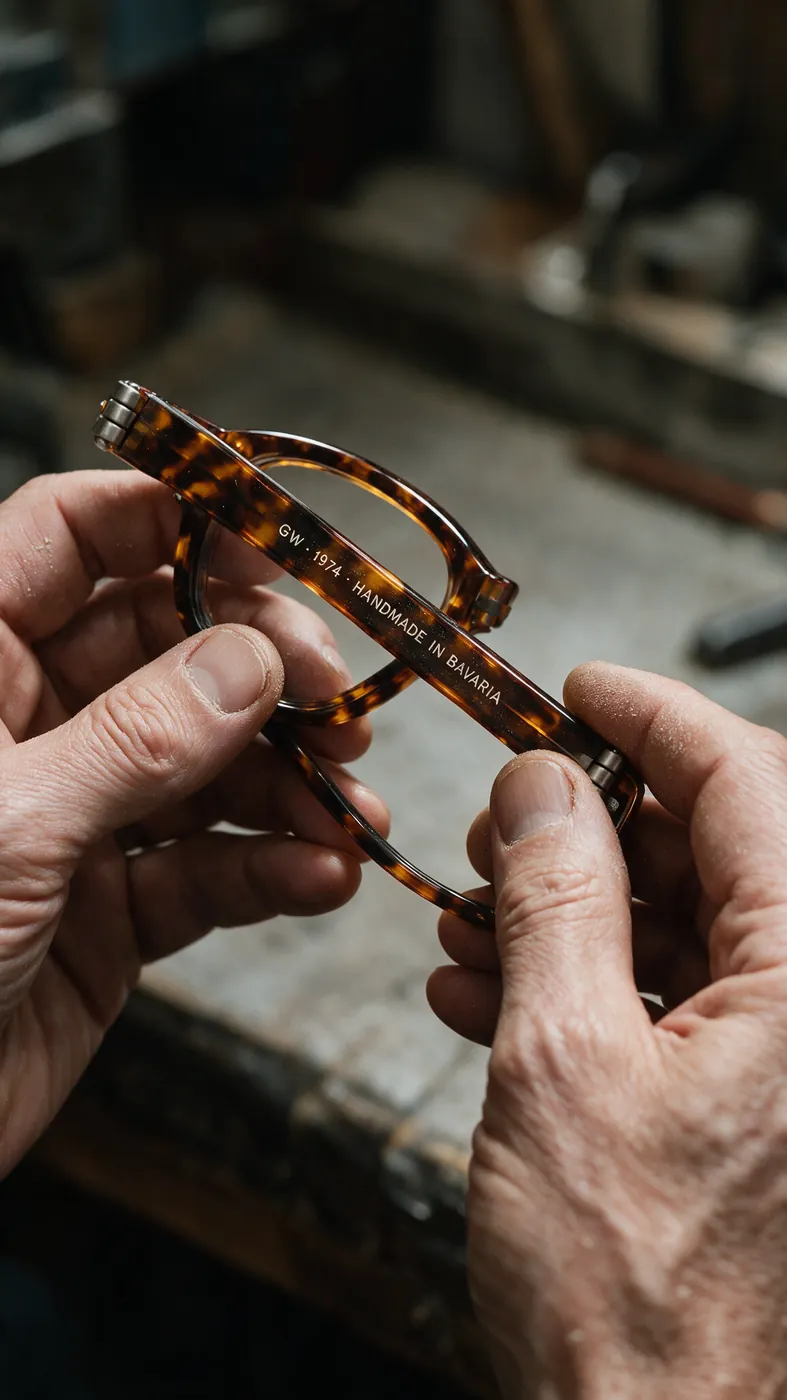
A finished CN-05 held at the bench, temple engraved GW 1974 Handmade in Bavaria

The temple engraving, cut after polishing · CN-05/03

Est. 1974 · Bavaria

The House

GRAUWALD was opened in 1974 by an optician who had spent eleven years repairing other people’s frames and had formed strong opinions about why they failed. He made one shape, sold it out of a single room, and refused to make a second.

The house has stayed that size on purpose. Eleven people, one bench per stage, roughly nine hundred frames a year. We have turned down every offer to licence the name, because a licensed frame is made by someone who has never met the hinge.

Founded
1974
Bench staff
Eleven
Annual output
~900 frames
Shapes in catalogue
One
Revisions since 1974
Four

The next cutting

Blocks are cut twice a year. Leave an address and we will write once, when the next run opens — not otherwise.

Recorded. We will write once, when the next blocks are cut.